
This page contains references to gender-based violence and sexual violence. Reader discretion is advised.
Digital GBV Documentation & Support
UN-standardised digital reporting for gender-based violence in eastern Congo.
- Gender Equality
- Peace, Justice and Strong Institutions
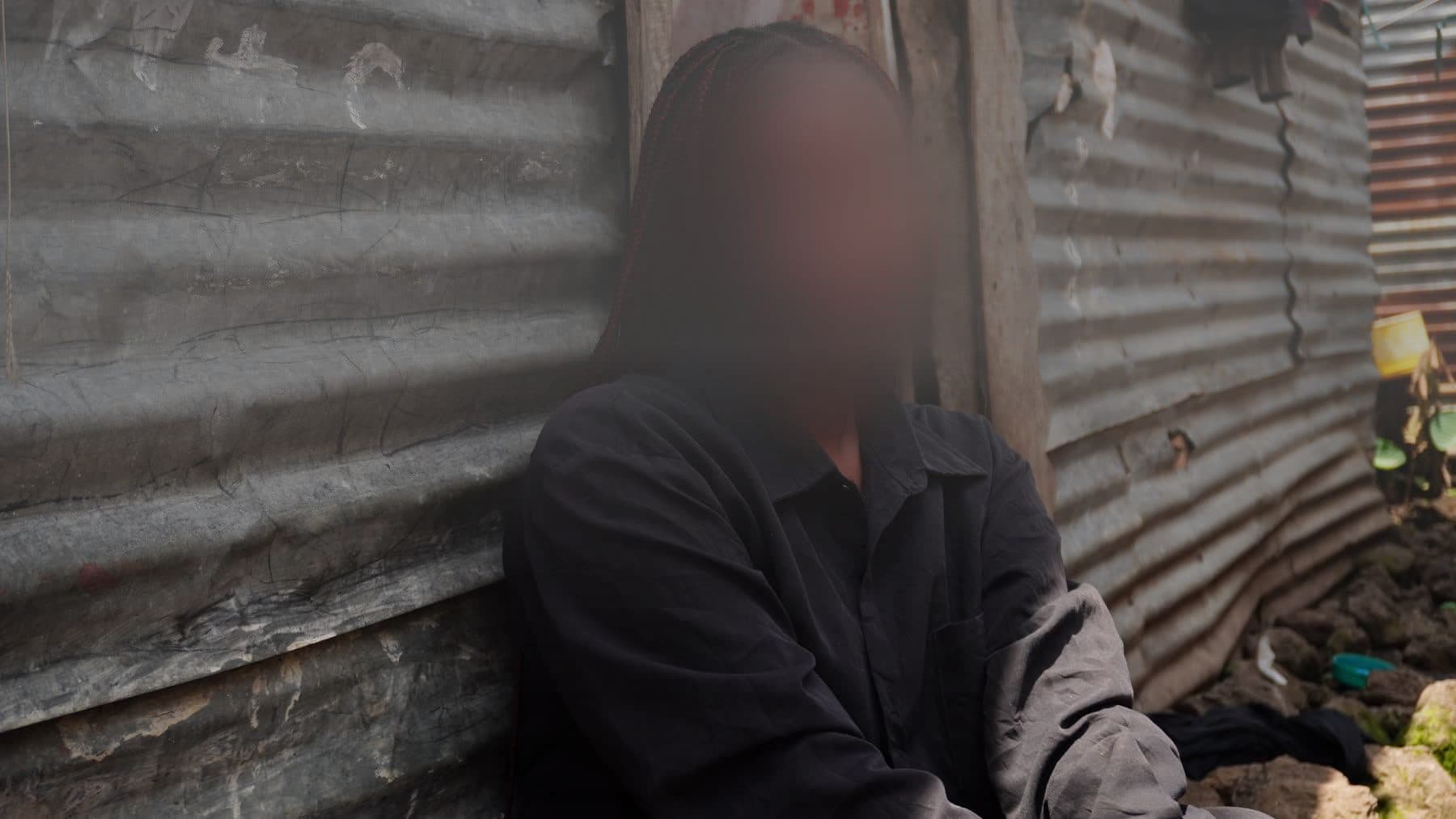
Why this image is blurred
Survivors of gender-based violence have an absolute right to confidentiality. This photograph was taken with consent in eastern DRC, but we have deliberately obscured the subject's identifying features so that no one can be re-identified from this page. Our digital GBV documentation system applies the same principle by design: case data is encrypted, role-restricted, aligned to the UN GBV Information Management System (GBVIMS) ethical and safety standards, and never tied to an identifiable face on any public surface.
The problem
Eastern Congo has been called the worst place in the world to be a woman. Sexual and gender-based violence is widespread — used as a weapon of war, perpetrated by armed groups, and tolerated in many domestic settings. Survivors who reach a health facility face a second injustice: paper case files that are inconsistent, incomplete, and often lost. Without a proper record, the clinical 72-hour window for post-exposure prophylaxis can pass uncovered, referrals fall through the cracks, and the legal pathway — already fragile — has nothing to build a case on. Every lost case file is a survivor whose voice has been erased a second time.
Our solution
eGov Africa's GBV documentation system is built on the United Nations' GBV Information Management System (GBVIMS) ethical and safety standards. Every case is documented on an encrypted tablet by a trained frontline worker. Access is role-restricted: only the clinician, caseworker, or referral partner with explicit need-to-know can open a record. The system tracks the full pathway — clinical care (PEP within 72 hours, HIV / pregnancy / STI testing), psychosocial support, legal referral, and case outcome — so nothing falls between services. Aggregate, anonymised data lets provincial authorities see patterns they could never see on paper: incident hotspots, perpetrator profiles, where the legal pathway is breaking. The survivor's identity stays protected. The evidence does not.
Results — what the data shows
2,503
GBV cases documented
25+
Registration sites
GBVIMS
UN ethical standard
PEP <72h
Tracked for every clinical case
Deployed at Kyeshero Hospital
The GBV documentation system is currently deployed at Kyeshero Hospital in Goma, North Kivu. At Panzi Hospital — founded by Nobel Peace Prize laureate Dr. Denis Mukwege, a global leader in treating survivors of sexual violence with holistic care spanning medical treatment, psychosocial support, and legal assistance — we currently run birth registration, with GBV documentation planned next.
Support Survivors in DRC
Help us expand digital GBV documentation to more health facilities in eastern Congo.
Donate Now